
ICESCO Holds Panel Discussion on Historical Manuscripts of Kazakhstan

29 December 2025
The Islamic World Educational, Scientific and Cultural Organization (ICESCO) held a panel discussion on the historical manuscripts of Kazakhstan, as part of a series of panel discussions organized by the Center for Calligraphy and Manuscripts under the title “Islamic Manuscripts in the World”. This comes within the framework of a scientific initiative aimed at surveying the state of Islamic manuscripts worldwide, gaining precise knowledge of each country’s manuscript inventory, discussing ways of preserving, safeguarding, and promoting them, and exploring means of integrating them into contemporary research within the fields of heritage studies and the humanities.
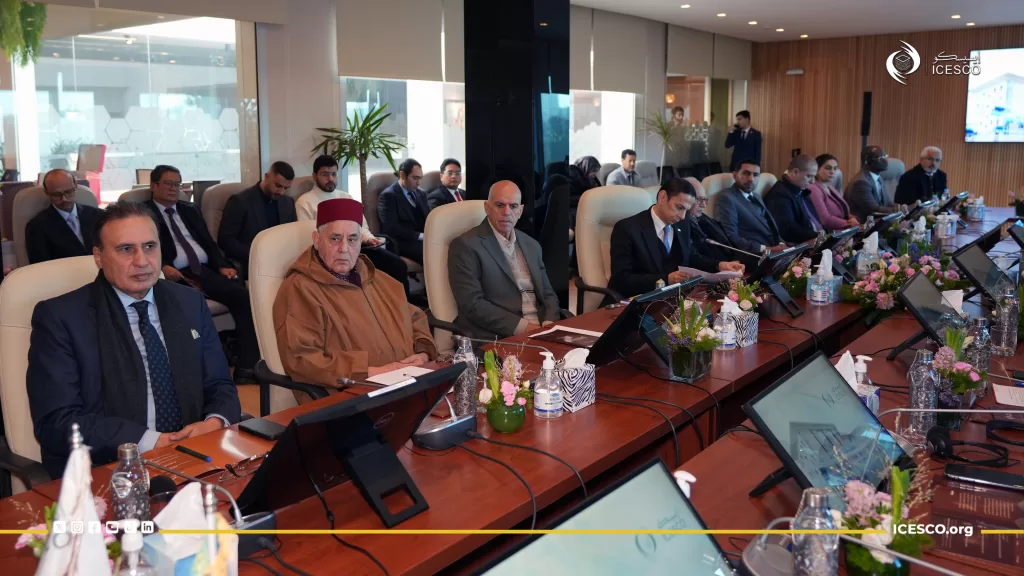
The first session of this series was held on Monday, December 29, 2025, at the Organization’s headquarters in Rabat, under the title “Islamic Manuscripts in Kazakhstan: Reality and Aspirations”. It was attended by H.E. Saulekul Sailaukyzy, Ambassador of the Republic of Kazakhstan to the Kingdom of Morocco and her country’s Permanent Delegate to ICESCO, alongside a number of ambassadors accredited in Rabat, Dr. Ahmed Chaouki Binebine, Director of the Royal Hassania Library at the Royal Palace in Rabat, as well as researchers and specialists interested in the field of manuscript heritage.
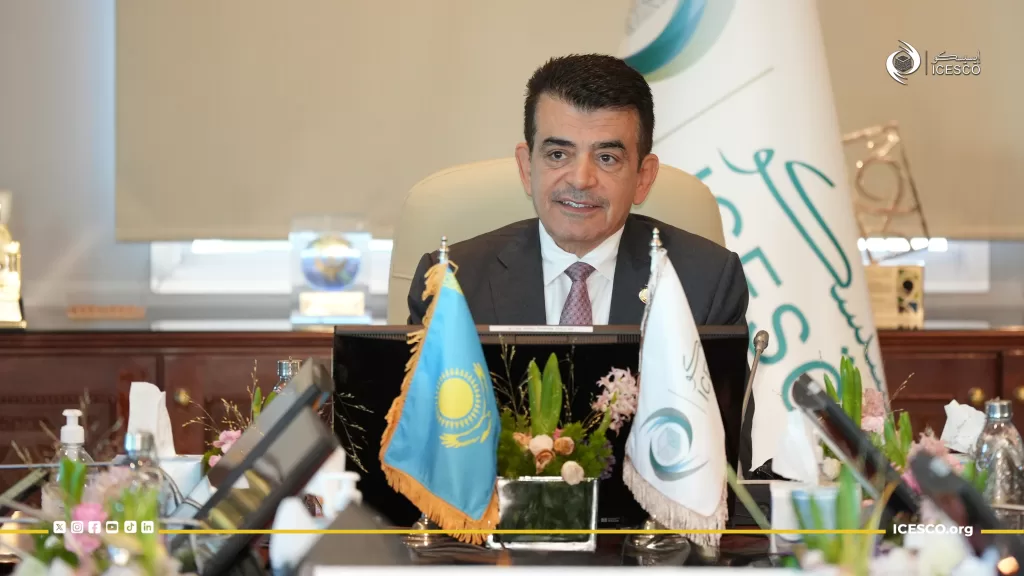
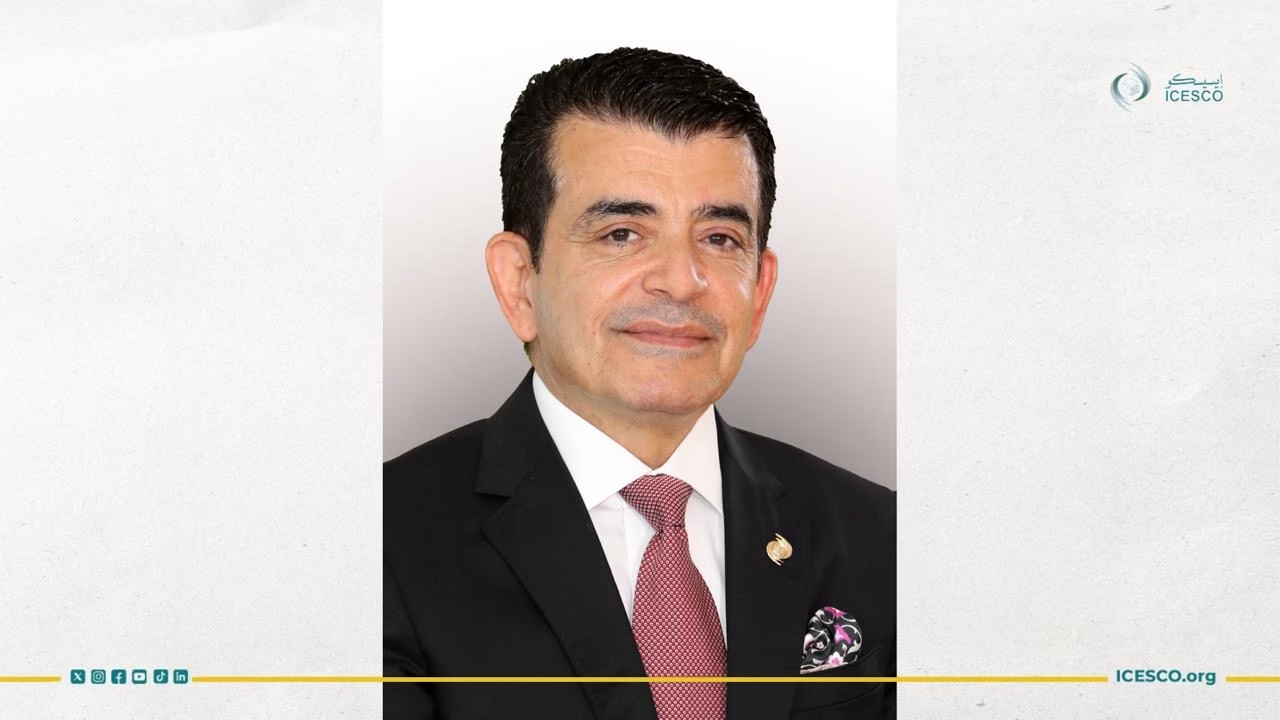
In his opening address, Dr. Salim M. AlMalik, Director-General of ICESCO, emphasized that the manuscript represents one of the foundational pillars of the history of human knowledge, as its texts intersect intellectual experience with its cultural context, and, through its transmission across generations, it remains a living record of written consciousness and evidence of the formation and development of civilizational identity.
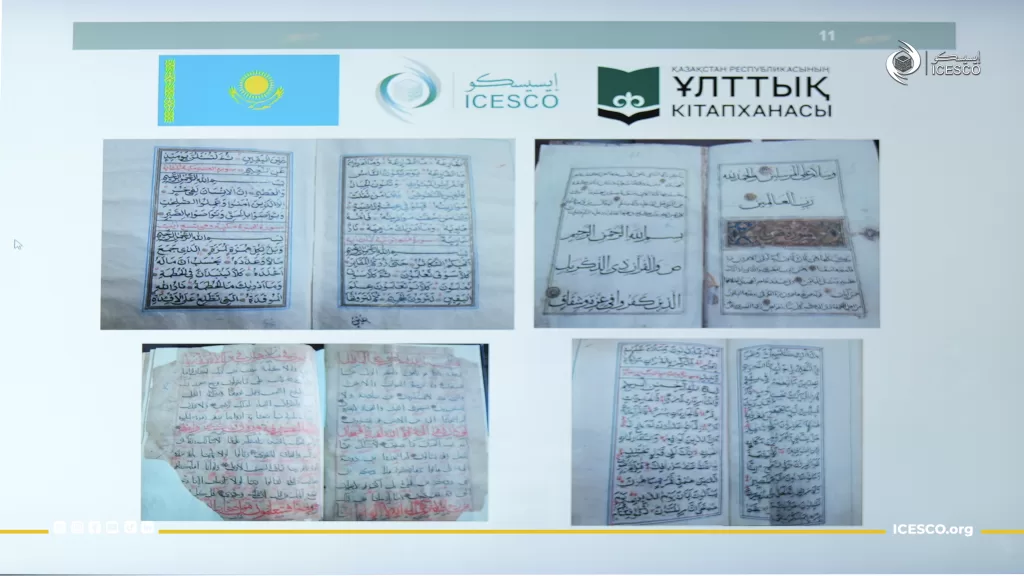
Furthermore, Dr. AlMalik pointed out that the most recent comprehensive survey of Kazakhstan’s manuscript holdings dates back approximately 35 years, during which more than 5,300 manuscripts preserved in nine institutional libraries were identified. He considered that these data open broad horizons for completing the inventory, re-description, and updating of catalogues.
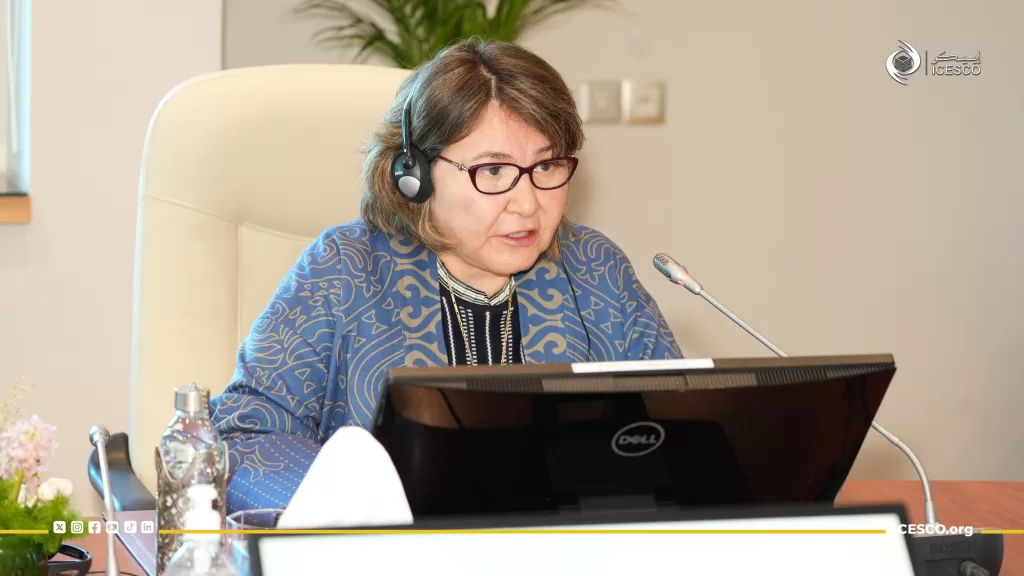
The Session was moderated by Dr. Idham Hanash, Director of ICESCO’s Center for Calligraphy and Manuscripts, who explained that the launch of this series aims to provide a platform bringing together researchers and manuscript-holding institutions, and to enhance cooperation in the fields of inventorying, documentation, preservation, and valorization.
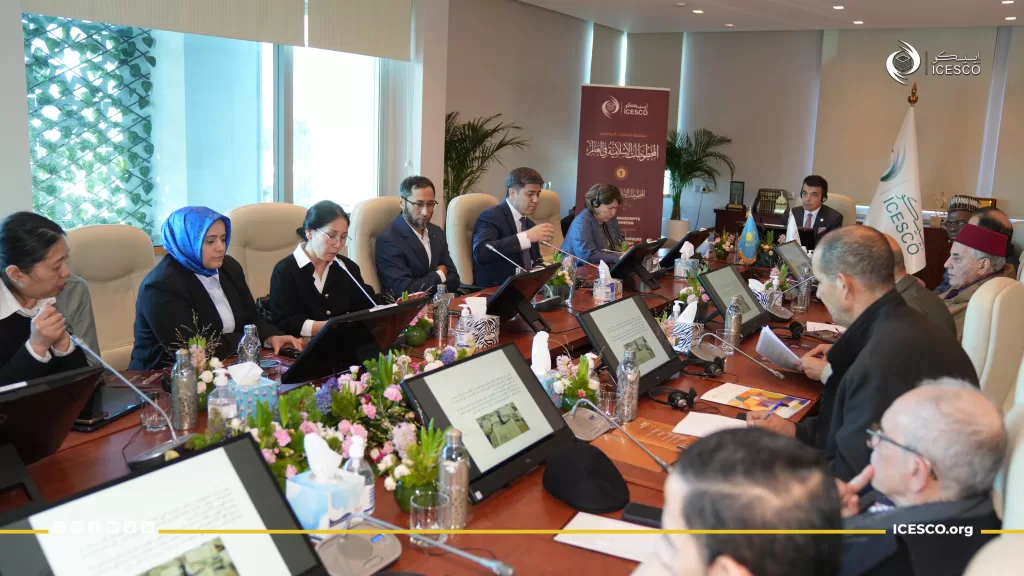
Subsequently, Dr. Ikhtiyar Balturi, Director of the Manuscript Studies Centre at the Central Scientific Library in Almaty, Kazakhstan, Dr. Rashid Mukhitdinov, Associate Professor at the Egyptian University of Islamic Culture “Nur-Mubarak” in Kazakhstan, and Dr. Aydingul Haban, Professor at the Department of the Middle East and South Asia at the Faculty of Oriental Studies, Al-Farabi Kazakh National University, delivered academic presentations highlighting the state of Islamic manuscripts in Kazakhstan.
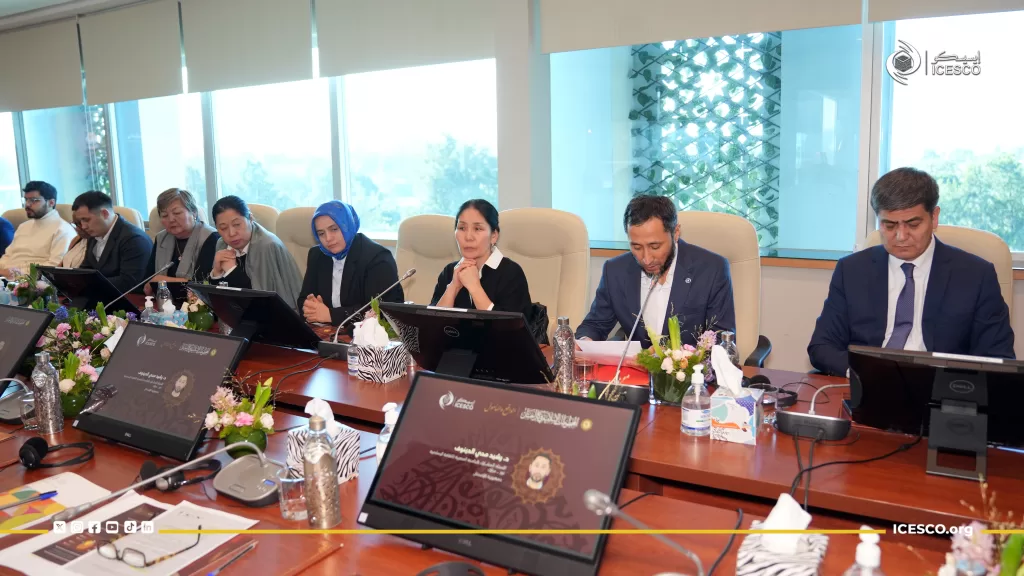
The speakers also highlighted that the manuscript corpus in Kazakhstan is characterized by linguistic diversity, as it was written in Arabic, Persian, Chagatai, and Turkish, in addition to Old Kazakh, affirming that its study reveals the trajectories of the transmission of Islamic knowledge in Central Asia.
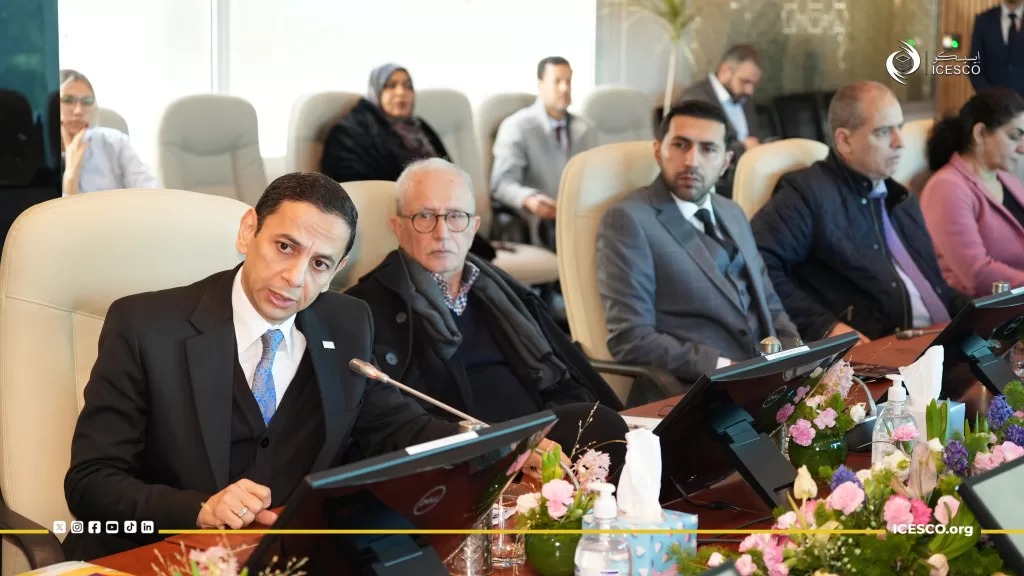
At the conclusion of the panel discussion, a closed meeting was held bringing together experts from ICESCO’s Center for Calligraphy and Manuscripts and the delegation of professors from Kazakhstan to explore avenues for future cooperation on Islamic manuscripts and their sciences in Kazakhstan.